Bedding · Duvet Covers
Duvet Cover Details That Matter: Weave, Closures, and Fit
A duvet cover is easy to underestimate. It is, after all, a large piece of fabric with a hole in it. But the weave determines how it feels through the night, the closure decides how willingly it cooperates on laundry day, and the fit can be the difference between a bed that looks composed and an insert that has migrated to one corner.
Choosing well is less about chasing a fashionable thread count than noticing the details that shape everyday use. Percale, sateen, and flannel each bring a different texture and temperature experience. Ties, buttons, and zippers each have their own small domestic politics. And sizing, which sounds straightforward until a comforter is involved, deserves a check before anything goes in the wash.
Start with the fabric, not the label
When comparing duvet covers, the weave offers a more useful clue than a grand-sounding finish or an impressive number on a tag. Weave affects how a fabric drapes, how it meets the skin, and how readily air moves through it. Fiber matters too: cotton is common because it is comfortable and washable, but the same fiber can feel quite different depending on how it is woven and finished.
Think first about the bedroom you actually sleep in. Is it warm for much of the year, or does it become a cold retreat by November? Do you like a crisp, freshly made bed, a smooth surface with a little sheen, or a soft layer that feels like an invitation to stay under the covers? The answers point more reliably to a suitable duvet cover than any universal declaration of the “best” fabric.
Texture also changes with laundering and use. A new cover may feel firmer than it will after several washes; brushed fabrics can soften, while a crisp plain weave may keep its characteristic cool hand. Follow the manufacturer’s care instructions, since heat, aggressive washing, and unsuitable detergents can alter the feel and lifespan of almost any textile.
Percale: crisp, breathable, and unfussy
Percale is a plain weave, with threads crossing in a simple, regular pattern. Its familiar qualities are a matte appearance and a crisp, relatively light feel. Many sleepers associate it with cool, breathable bedding: the fabric does not cling in the way some smoother, heavier materials can, and it tends to suit people who sleep warm or prefer a fresh, airy surface.
A percale duvet cover can be a practical choice in a warm room, during summer, or for someone who likes bedding that feels neat rather than glossy. Its restrained finish also works well with a pared-back bedroom. The appeal is not theatrical. Percale is more like a well-made white shirt: clean-lined, dependable, and better for being used than admired from a distance.
That crispness is a matter of preference. Someone seeking a silky, flowing drape may find percale a little plain at first, while another sleeper may consider it exactly the point. It can wrinkle, as cotton often does, and should not be judged solely by whether it comes out of the dryer looking pressed. If a particularly smooth appearance matters, removing the cover promptly and folding or making the bed soon after drying can help.
Thread count is sometimes treated as a shortcut to quality, but it cannot explain the whole story. Fiber length, yarn quality, weave, finishing, and construction all contribute to how a cover feels and wears. When comparing percale duvet covers, consider the fabric description and care guidance alongside any count listed, rather than assuming that a higher number automatically means cooler or more durable bedding.
Sateen: smooth and softly draped
Sateen is woven with a structure that brings more threads across the fabric surface, creating a smoother hand and a subtle sheen. It is still cotton when made from cotton, but it does not feel like percale. The surface tends to glide against the skin, and the fabric often drapes more fluidly over the bed. For sleepers who enjoy a soft, polished feel, that difference can be immediately appealing.
A sateen duvet cover can make a bed feel a little more dressed, even when the room itself is simple. Its smoothness suits people who dislike the crisp, slightly papery sensation that some new percale has before it softens. It may also feel more substantial than a light percale cover, though warmth depends on the fabric’s weight, the room, and the sleeper—not weave alone.
Sateen’s smoother face may show creases or signs of wear differently from percale, and it benefits from sensible care. Use the recommended wash temperature, avoid overloading the machine, and dry according to the label. A cover is a working textile, not a museum object, but a little care helps preserve its drape and finish.
The choice between percale and sateen often comes down to the small sensations noticed at bedtime. Percale feels crisp and airy; sateen feels smooth and softly fluid. Neither is inherently more comfortable. If possible, handle fabric samples or compare bedding you already own. The hand remembers these distinctions better than a product description can explain them.
Flannel: a warmer layer for colder nights
Flannel is brushed to raise a soft surface on the fabric, giving it a warmer, cozier feel than a smooth percale cover. It is often associated with winter, though climate, heating, and personal temperature preferences complicate any strict seasonal rule. In a chilly bedroom, the brushed face can feel welcoming at the moment of getting into bed, before body heat has had time to warm the layers.
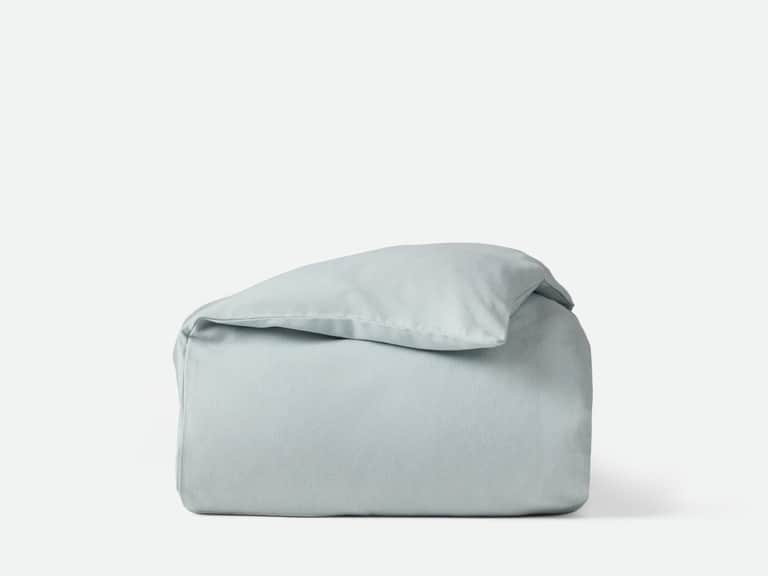
Organic cotton flannel offers that familiar brushed softness in a cotton construction. For example, the Cloud Brushed™ Organic Flannel Duvet Cover is described as a heavier, warmer-feeling flannel with a soft surface designed to resist pilling and become softer with use. Its construction includes inside ties and hidden coconut shell buttons—details that matter as much in daily handling as the fabric’s winter appeal.
Flannel is not automatically the right choice for every cold-weather sleeper. A warm room, a high-loft insert, and a naturally hot sleep can turn a cozy cover into too much of a good thing. Consider the whole bedding combination: cover, insert, mattress, sleepwear, and room temperature all contribute to how warm the bed feels. A lighter insert under flannel may be more comfortable than simply adding more insulation everywhere.
Care is part of the bargain. Wash flannel gently, use like colors where instructed, and avoid leaving it to tumble longer than necessary. The product’s care label should take precedence over general advice. Brushed fabrics are meant to feel soft, and thoughtful laundering helps maintain that surface over time.
Closures: small hardware, large consequences
The opening of a duvet cover is where a pleasant textile can become a weekly puzzle. Closures hold the insert inside and determine how easily the cover can be removed for washing. The options commonly include buttons, zippers, and, less often, ties or other fastenings along the opening. Each can work well when it is thoughtfully made and suited to the person using it.
Buttons
Buttons are familiar, simple to inspect, and relatively easy to replace if one comes loose. They can be visible as a decorative detail or concealed for a cleaner finish. Their drawback is the time it takes to fasten a row, particularly when the opening is wide and the insert has developed ambitions of its own. Check that buttons are securely attached and that the placket overlaps enough to keep the insert from peeking through.
Zippers
A zipper can make changing a duvet cover faster, especially when it runs along a generous opening. It also gives a tidy finish when fully closed. Look for a zipper that moves smoothly and is protected from direct contact with skin or delicate fabrics; a fabric flap can help cover the teeth. A zipper is convenient, but it is a mechanical part, so care during laundering and handling matters. Do not force it if fabric has caught in the track.
Ties and the unseen job of keeping an insert in place
Interior ties attach to loops or corners on the duvet insert, helping prevent the filling from sliding down or bunching in one area. They are particularly useful for lofty inserts or for anyone who tosses and turns. Four corner ties are a common arrangement, while some covers include additional ties along the sides. More points of attachment can help distribute a large insert, though they also add a few minutes to changing the cover.
Ties do not replace a well-matched fit. They are a stabilizing detail, not a way to make a substantially oversized cover behave like a tailored one. Before buying, confirm that the insert has loops or another suitable attachment point. When fitting the cover, secure the corners first, then shake and smooth the insert into place before closing the opening.
These details are visible in the Cloud Brushed™ Organic Flannel Duvet Cover, which has inside ties and hidden buttons. That combination gives the insert attachment points while keeping the closure understated. It is a useful example of how a duvet cover’s construction can address both function and appearance without making either the central event.
Fit: measure both the cover and the insert
Duvet sizing is not always as standardized as the words Twin, Queen, or King suggest. A comforter labeled Queen may differ in dimensions from another Queen, and a duvet cover’s stated measurements may not match the insert you already own. Even a modest mismatch can change the bed’s appearance and comfort: a cover that is too large may leave the insert drifting inside, while one that is too small can compress its loft and pull at the seams.
Measure the insert itself, rather than relying only on the size printed on its packaging. Then compare those measurements with the duvet cover’s dimensions. The aim is a compatible pairing, not a universal rule that every cover should be exactly the same size as every insert. Different constructions and desired levels of fullness can affect the ideal match, so manufacturer guidance is useful when available.
Check width and length separately. A cover may be generous in one direction and short in the other, and the result can be a bed that never quite settles into place. Also consider the height of the mattress and the style of the bed: the cover’s drop over the sides affects the overall look, particularly when the bed is high or the comforter is intended to cover the frame.
Before washing a new cover, check its care instructions and any information about shrinkage. Cotton textiles can change dimensions slightly with laundering, especially if exposed to high heat. If an insert is already close to the cover’s limits, that detail deserves attention. A little measuring at the start is easier than trying to persuade a reluctant duvet to fit after its first wash.
A quick comparison by sleeping preference
- For a crisp, cool hand: Consider cotton percale, especially if you sleep warm or prefer a matte, airy surface.
- For a smooth, softly draped feel: Sateen may suit you if you like a more polished surface against the skin.
- For a brushed, cozy surface: Flannel is a natural candidate for chilly rooms and colder seasons, provided the overall bedding does not become too warm.
- For less insert movement: Look for interior ties that correspond with attachment loops on the duvet insert.
- For quicker cover changes: A smooth-running zipper may be convenient; buttons are equally workable if you do not mind fastening them.
- For a reliable fit: Compare actual cover and insert dimensions rather than relying on size names alone.
This is a guide, not a set of laws. A person may prefer percale in winter, flannel in a well-ventilated room, or sateen throughout the year. The best choice is the one that feels comfortable in your own bedroom and remains manageable in your actual laundry routine.
Care and everyday upkeep
A duvet cover protects the insert from ordinary contact with skin, hair, and the daily life of a bedroom. Because it can be removed, it is usually easier to launder than the insert itself. That convenience is one of its quiet virtues: regular washing helps keep the bed feeling fresh without requiring frequent cleaning of a bulky comforter.
Follow the care label for water temperature, cycle, and drying instructions. Close buttons or zippers before washing, and avoid packing the machine so tightly that the cover cannot move freely. If the cover has ties, secure them as directed to reduce tangling. Use a detergent suitable for the fabric and avoid adding products that the manufacturer warns against. Natural or certified fibers do not eliminate the need for careful laundering.
When the cover is dry, put it back on promptly if you want to limit wrinkles. A useful method is to turn the cover inside out, reach through to grasp its two far corners, and hold the matching corners of the insert. Shake the cover down over the insert, then fasten ties and close the opening. This is not glamorous choreography, but it is often quicker than wrestling the entire bed into submission.
A buying checklist worth keeping
Before choosing a duvet cover, pause over a few practical questions. The answers help turn a broad category into a decision you can live with.
- What feel do you prefer: crisp, smooth, or brushed and soft?
- Does your room tend to run warm, cool, or change noticeably with the seasons?
- What are the insert’s measured dimensions, and how do they compare with the cover?
- Does the cover include interior ties, and does your insert have loops to attach them?
- Is the opening secured with buttons, a zipper, or another closure you find easy to use?
- Are the care instructions realistic for your laundry equipment and routine?
- Are certifications and material descriptions clearly stated, if those considerations matter to you?
Certifications can help clarify how a textile has been produced or assessed, but they are not a substitute for checking construction, fit, and care. A well-chosen cover should serve the sleeper first. The most beautiful fabric in the world is less appealing if the insert slides to the foot of the bed every night.
The right details make a bed easier to live with
A duvet cover is both a comfort layer and a practical piece of household equipment. The weave shapes the sensation of getting into bed; the closure makes washing and changing more or less pleasant; the dimensions determine whether the insert stays lofty and centered. These are modest distinctions, but bedding is made of modest distinctions. A few seconds of thought before buying can spare months of adjusting corners and smoothing lumps.
Choose percale for its crisp, breathable character, sateen for a smoother drape, or flannel for a brushed layer that feels especially welcoming in colder weather. Then look beyond the fabric name. Check the closure, find out whether ties are included, measure the insert, and read the care instructions. The result need not be elaborate. A well-fitting cover, suited to the room and the sleeper, can make the bed feel calm, comfortable, and ready to be used again tomorrow night.